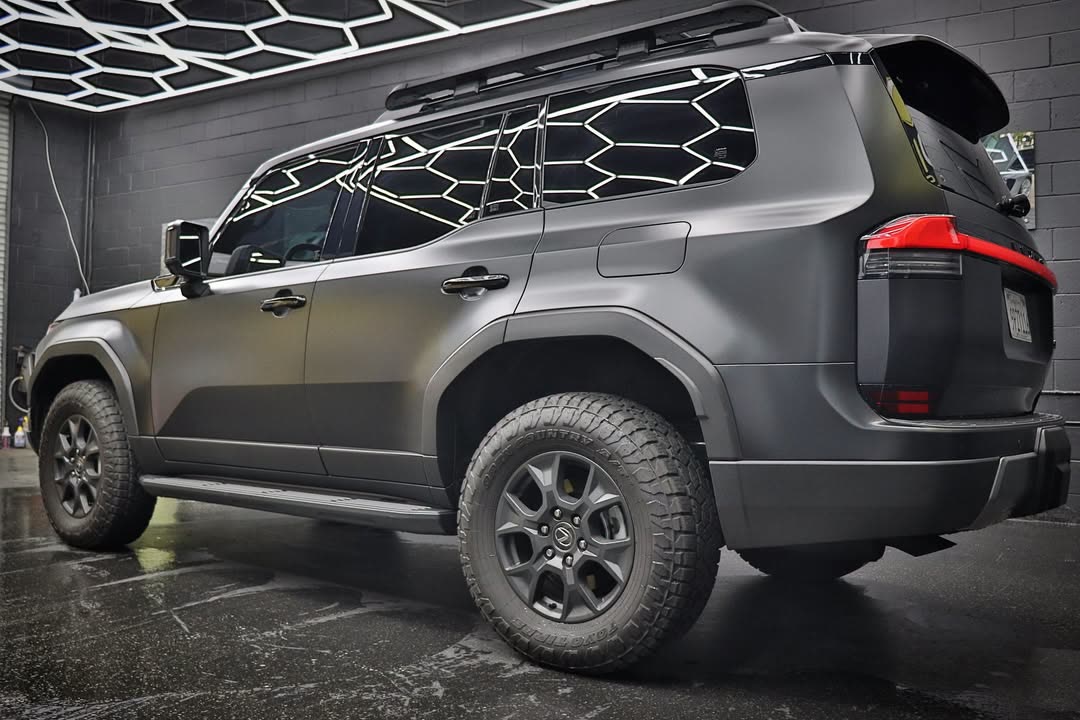
In San Diego the sun is not a summer problem, it is a year-round one. A good ceramic tint keeps the cabin cooler, blocks the UV that fades interiors and skin, and cuts glare, without making it hard to see out at night.
We install XPEL window film. Here is what makes XPEL Prime XR Plus our top choice, and how to pick a shade.
What Prime XR Plus does
- Up to 96% infrared heat rejection. Infrared is the heat you feel on your skin through the glass. Ceramic particles block it without having to make the film dark.
- SPF 1,000, 99% UV protection. Protects your skin and keeps the dashboard and leather from fading.
- Crystal clear visibility, day and night, with no interference with phone, GPS or radio signals.
- Lifetime warranty.
We also install XPEL Prime XR, a step below XR Plus. See both on our window tint page.
Picking a shade
The percentage is how much visible light the film lets through: the lower the number, the darker the film. Because Prime XR Plus blocks heat with ceramic technology, even a light shade rejects a lot of heat.
- 70%, nearly clear: maximum clarity, for drivers who want heat and UV protection without a tinted look.
- 55%, light: light and balanced.
- 35%, medium: the most popular look; stylish without being too dark.
- 20%, dark: privacy and style.
- 5%, limo: the most privacy.
California tint basics
California limits how dark the front side windows and windshield can be, while the rear side and back windows have more freedom on vehicles with mirrors on both sides. The rules are specific and they change, so we go over what is allowed for your car before we install, and help you choose a shade that fits both the look you want and the law. This is a general guide, not legal advice.
Why ceramic, not cheap tint
Basic dyed films mostly darken the glass. They can fade and turn purple over time, and they do not block much heat for how dark they are. A ceramic film like Prime XR Plus rejects infrared heat at any shade and keeps its color, which is why it is worth it in a climate like ours.